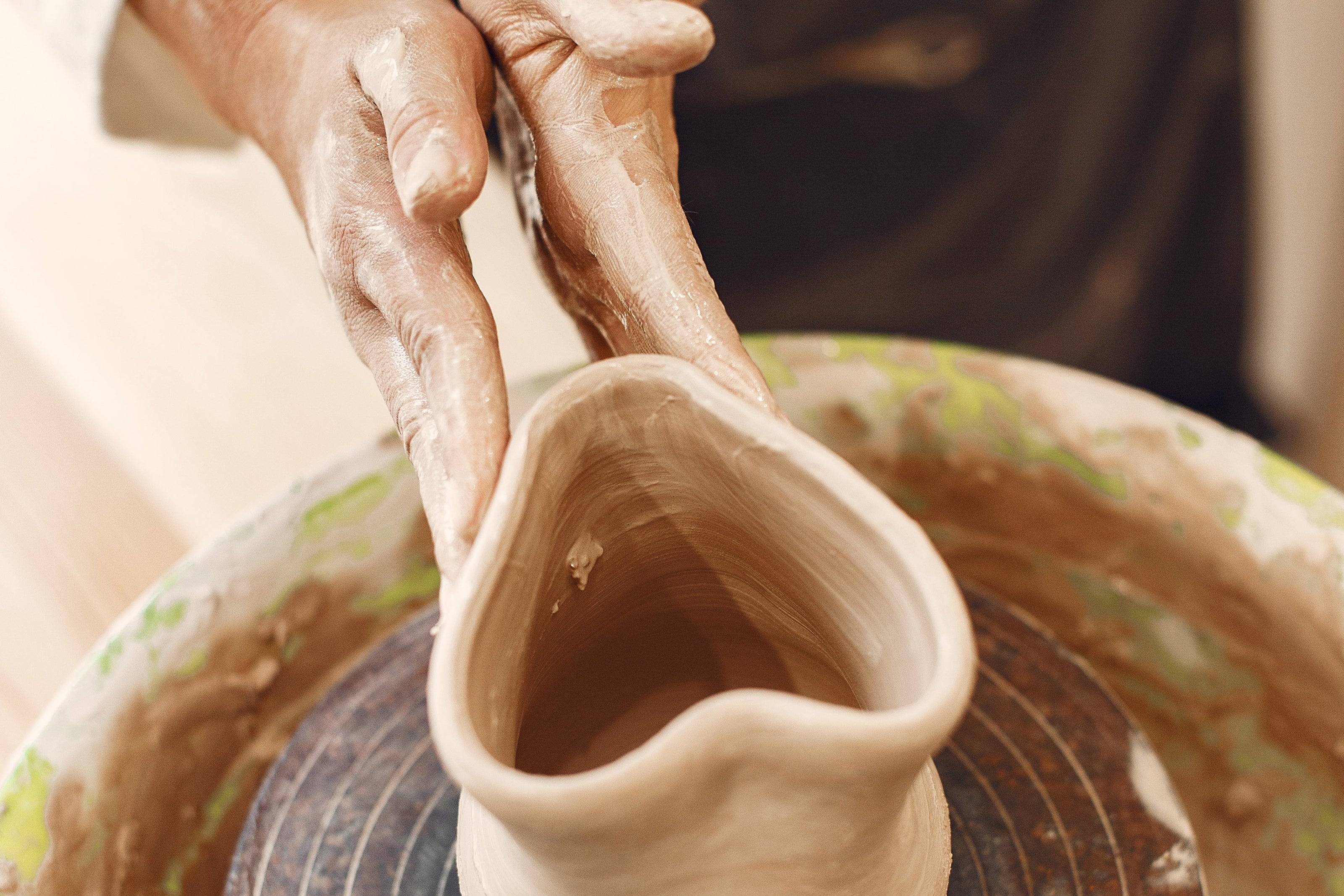
Of all the equipment in a studio, the wheel is the one people get romantic about, and the one they most often choose for the wrong reasons. They read a spec sheet, fixate on top speed or motor wattage, and end up with a wheel that does not match how they actually throw. After years of fitting wheels to Dallas-Fort Worth potters, classrooms, and production studios, we can tell you the most useful question is not which wheel is best. It is who is sitting at it, and what are they making.
We carry three lines that cover the full range, and each earns its place: Shimpo and Brent for serious studio and production throwers, Speedball for classrooms and first wheels, and Skutt wheels for a balance of the two. We think about the choice this way.
Torque matters more than speed
The single most misunderstood spec is speed. Almost nobody throws fast. What you actually need is for the wheel to hold its speed when you press into a centered mass of clay. That ability is torque, and it is where the price differences live.
A high-torque wheel does not bog down when you lean into ten or twenty pounds of clay to center it. A weaker wheel slows under load, which fights you at exactly the moment you need steadiness. This is why production throwers and university programs gravitate to Brent and Shimpo. Brent wheels, made in the United States for decades, are known for direct-drive torque that simply does not flinch. Shimpo's wheels are famous for a brushless DC motor that is exceptionally quiet and holds speed under heavy load. For someone centering large amounts of clay all day, that difference is felt in the shoulders by closing time.
Match the wheel to the thrower
Let us be concrete about who should look at what.
The beginner or hobbyist throwing a few pounds at a time does not need a production motor, and we will not upsell one. A Speedball Artista or a smaller Shimpo handles small-to-medium work beautifully and costs far less. Spending production money on a wheel that will only ever see five-pound bowls is money that should have gone toward clay and glaze.
The classroom needs durability and value above all. Speedball wheels have earned their place in schools because they take abuse, they are light enough to move and store, and the price lets a program buy several wheels instead of one. For thirty students cycling through, durability and quantity beat refinement.
The serious studio potter or production thrower should buy torque and buy it once. A Brent Model C or a Shimpo VL Whisper will center anything you can lift onto it, run for years, and hold value. This is the wheel you do not replace.
The details that change the daily experience
Beyond torque, a handful of practical features shape how a wheel feels every single session.
The splash pan is the one people forget and then resent. A removable, two-piece splash pan that you will actually take out and clean is worth more than a fancier feature you ignore. The wheels people keep clean are the wheels that last, because slip and grit are what wear bearings.
Reversibility matters if you are left-handed or teaching left-handed students. Most quality wheels reverse direction, but confirm it rather than assume it.
Hand control versus foot pedal is a real ergonomic choice. A foot pedal frees both hands and suits most throwers. A hand lever can be better for potters with certain mobility needs or for specific decorating tasks. Try both if you can.
Portability and weight matter more than buyers expect. A studio wheel that lives in one spot can be heavy and that is fine. A wheel that gets moved, stored, or shared, common in classrooms and small home studios, benefits from being lighter.
Do not forget the bats
A wheel is only half of a working throwing station. You throw onto a bat, the removable disc that lets you lift a wet pot off the wheel head without distorting it. The catch is that bat pin spacing is not universal across brands. Choosing a bat system early, and sticking to it, keeps your whole studio interchangeable. We keep banding wheels and bats in stock precisely because we watch people buy a beautiful wheel and then realize they have nothing to throw onto.
The advice you will not find on a spec sheet
Ceramics Monthly and most experienced teachers will tell you something no manufacturer prints: the best wheel is the one that gets you throwing without fighting the machine, so your attention stays on the clay. For a beginner that often means a simpler, quieter wheel that does not intimidate. For a professional it means a workhorse that disappears under your hands. Neither person is served by the other's wheel.
A quick way to decide
- 1.Be honest about your typical clay weight, not your ambitions
- 2.If you center heavy or throw all day, buy torque (Brent or Shimpo)
- 3.If you are a school or a beginner, buy durable value (Speedball)
- 4.Confirm the splash pan is easy to clean and the wheel reverses
- 5.Choose a bat system and stay in it
- 6.If you can, sit at the wheel before you buy
That last point is the real argument for a local supplier. A wheel is a tool your body has a relationship with, and a spec sheet cannot tell you how a wheel feels under your hands. Come sit at one in our Carrollton showroom. Throw a little. We would rather you choose the wheel that feels right than the one that looked best on paper, because you will keep that one for a very long time.