Of every question that comes through our door in Carrollton, the first kiln is the one people are most afraid to get wrong. They are right to take it seriously. A kiln is the largest single purchase most studios and classrooms make, it runs at temperatures hot enough to melt rock, and once it is wired into a wall it is not something you casually return. We have helped enough Dallas-Fort Worth potters and art teachers through this decision to know that almost every regret traces back to one of four things: the wrong cone rating, an electrical surprise, no plan for venting, or a kiln sized for the work someone imagined rather than the work they actually do.
We walk through it in that order.
Start with the cone, then buy headroom
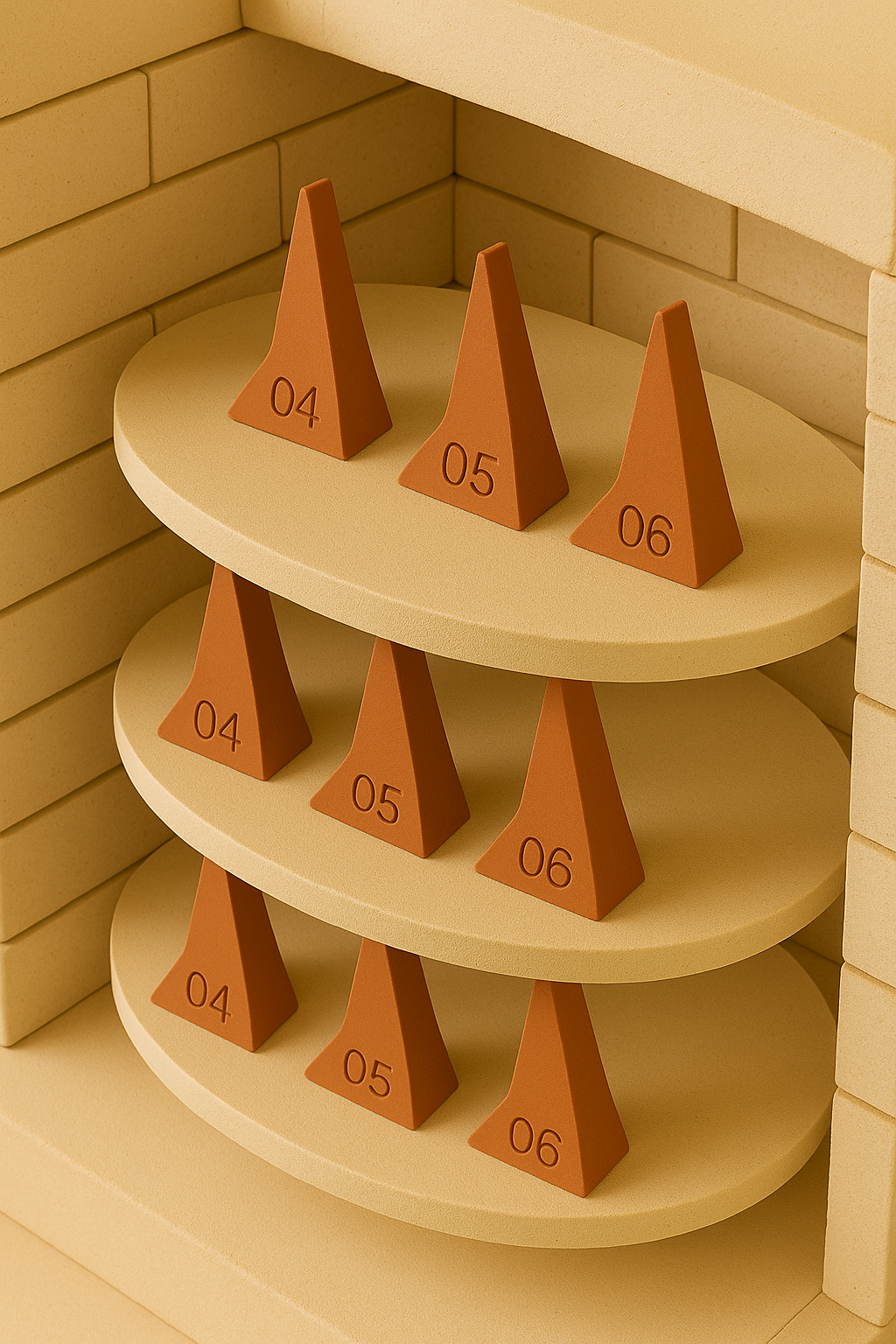
Before anything else, you need to know how hot you intend to fire. In ceramics we measure that in cones, which track heatwork, the combined effect of temperature and time, rather than temperature alone. The Orton Ceramic Foundation, which has manufactured pyrometric cones for over a century, publishes the temperature equivalents most of the industry treats as standard. At a normal firing ramp, cone 04 matures around 1945°F, cone 6 around 2232°F, and cone 10 around 2345°F.
Why does this matter for buying? Because a kiln rated to exactly your firing temperature will spend its whole life working at its limit. Elements wear fastest when they are pushed hardest. A kiln rated one or two cones above your target gives the elements an easier life and adds years to them. If you fire stoneware at cone 6, we will almost always steer you toward a cone 10 kiln run to cone 6 rather than a cone 6 kiln run flat out every load. The slightly higher purchase price is cheaper than premature element replacement.
Confirm your electrical before you fall in love
The second regret is electrical, and it is the one that stops a project cold. Most studio kilns do not run on a standard household outlet. According to manufacturer specifications from Skutt and L&L, a common mid-size studio kiln draws in the range of 40 to 50 amps and needs a dedicated 240V circuit, often on a 60-amp breaker, frequently with a NEMA 6-50 receptacle. A larger production kiln can need considerably more.
We ask three questions before anyone commits:
- What is the amperage draw of the kiln you want, at the voltage your building actually supplies?
- Is there a dedicated circuit, or does an electrician need to run one?
- What does the breaker panel have room for?
A kiln that arrives before the circuit is ready is a very expensive paperweight sitting in a garage. Sorting the electrical first is not bureaucracy, it is the difference between firing next week and firing next quarter.
Plan venting from day one
A kiln releases fumes during firing, including during the early bisque stage as organics and sulfur burn off. In a classroom, venting is not a nice-to-have, it is a safety requirement. Beyond air quality, a downdraft vent pulls a small, steady stream of fresh air through the kiln, which evens out the atmosphere and, as the manufacturers themselves note, extends the life of elements and thermocouples by reducing corrosion.
We have seen too many kilns bought without a vent, then shoehorned into a closet where they overheat the room and corrode early. Budget for the vent when you budget for the kiln. If you are putting a kiln in a school, talk to your facilities team about make-up air before the unit ships.
Size it for your real workload, not your aspirations
The fourth regret is size, in both directions. People buy a tiny kiln to save money, then discover they can only fire four mugs at a time and the thing runs constantly. Or they buy a huge kiln because it felt ambitious, then never fill it, which wastes electricity and makes every firing an exercise in waiting until they have enough work to justify turning it on.
The honest question is how much you fire in a normal week or a normal class period, not how much you hope to fire someday. A high-volume classroom of thirty students needs a different kiln than a home potter making a dozen pieces a month. We would rather sell you the kiln that fits your actual rhythm and watch you outgrow it happily than sell you something that sits cold.
Digital controller or manual kiln sitter
Modern kilns mostly come with a digital controller, and for good reason. A programmable controller holds a ramp schedule, fires to a target cone, and can run a controlled cool, which matters for certain glazes. Ceramics Monthly and most studio educators now treat digital control as the default for any program that wants repeatable results.
Manual kiln-sitter kilns still exist and still work, and they are cheaper. They rely on a physical cone that bends and trips a switch. For a hobbyist on a budget who is comfortable babysitting a firing, they are fine. For a classroom, a busy studio, or anyone firing glazes that need a controlled cool, the digital controller pays for itself in consistency and in not having to stand by the kiln.
Why we push so hard on buying local
We are a Dallas-Fort Worth supplier, and we will be honest that this section is partly self-interested. It is also true. A kiln is freight-fragile and heavy. A cross-country shipment that arrives with cracked brick or a bent lid is not a quick refund, it is a lost month and a freight claim. When we deliver a kiln across the metroplex, it arrives intact, and if something is wrong we are a phone call and a short drive away, not a support ticket.
The bigger reason is service. We repair kilns. When your elements eventually wear, when a thermocouple drifts, when a relay sticks, the supplier who sold you the kiln can also fix it. That relationship is worth more over the life of a kiln than any single discount.
A short checklist before you buy
- 1.Decide your firing cone and add headroom
- 2.Confirm voltage, amperage, dedicated circuit, and breaker capacity
- 3.Budget for a downdraft vent and confirm make-up air
- 4.Size the kiln to your real weekly volume
- 5.Choose a digital controller unless you have a specific reason not to
- 6.Buy from someone who can also service it
Bring us your answers to the first five and we will help you with the sixth. Come by the showroom in Carrollton, call us at 817-535-2651, or start with our kilns page and we will talk through the specific room, the specific work, and the specific kiln that fits both. The goal is simple: the kiln that arrives is the one you actually needed, and it fires beautifully for many years.